Polaroid Camera
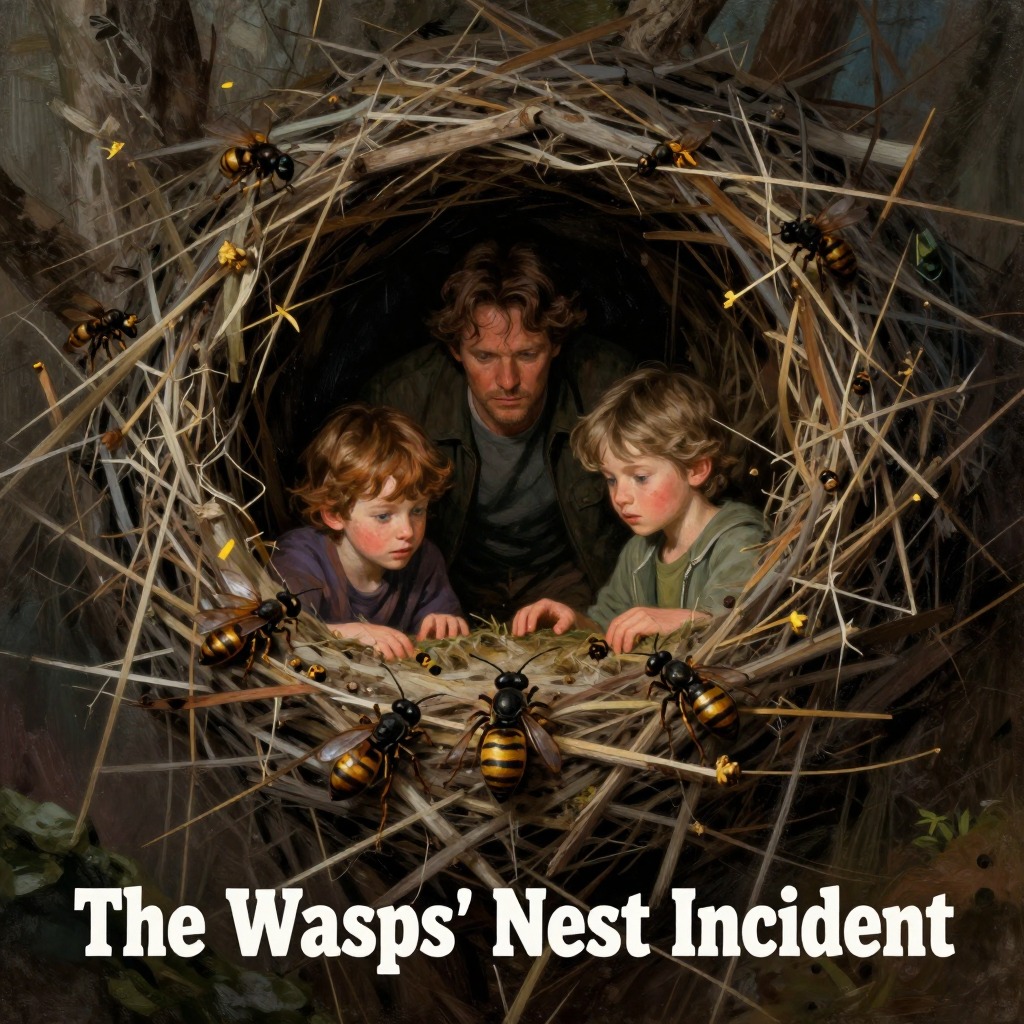
The Polaroid Square Shooter camera, a common household instant-photography device, appears in the Torrance family's quarters at the Overlook Hotel as an instrument of practical, worldly recourse. When a defective bug bomb fails to exterminate a nest of wasps in Danny's bedroom, and the insects emerge to sting the boy repeatedly on his left hand, Jack Torrance seizes the camera not as a memento of the incident but as a piece of evidence. He retrieves the Polaroid from the dresser drawer, jabs a flashcube onto the attachment, and takes four pictures of Danny's injured hand, instructing his wife Wendy to time each print's development on the locket watch she wears around her neck. The act is methodical and grimly purposeful: Jack calculates the potential value of the injury at "five thousand dollars a sting" and intends to use the photographs to sue the manufacturer of the defective bomb. In this moment, the camera functions as a bridge between the family's ordinary, litigious world and the increasingly uncanny environment of the hotel, a rational tool deployed against a physical threat that will soon prove to be only a prelude to far more sinister forces.
Forensic Documentation and Legal Strategy
The Polaroid's role is explicitly forensic. Jack does not photograph the wasps' nest itself until after he has documented Danny's hand, and even then he takes a separate picture of the nest under the Pyrex bowl, now crawling with live wasps that had seemingly returned from the dead. The camera's instant-developing technology is crucial: it provides immediate, tangible proof that can be sent to a lawyer. Jack's subsequent phone call to a Boulder attorney, who expresses doubt about the viability of a lawsuit, underscores the camera's function as the centerpiece of a failed legal strategy. The photographs of Danny's hand, with its eleven separate stings, are the only concrete evidence the Torrances have of the bomb's defect, and their inability to successfully sue marks the beginning of Jack's growing frustration and his turn away from rational problem-solving.
Transitional Object Between Worlds
The Polaroid camera occupies a liminal position in the narrative, straddling the boundary between the mundane and the supernatural. Its use is entirely rational and grounded in the material world: it records a physical injury caused by a defective consumer product. Yet the incident it documents—the inexplicable return of wasps that Jack had already killed with the bomb—is the first clear sign that the hotel's malevolent influence is at work. The camera thus captures not only the physical evidence of the stings but also, inadvertently, the first tangible trace of the Overlook's power to subvert natural laws. Jack's reliance on the camera as a tool of legal redress represents his final, desperate attempt to impose order and accountability on a situation that is rapidly slipping beyond the reach of any human institution. When the lawsuit fails, the camera's evidentiary value is exhausted, and Jack's subsequent descent into the hotel's grip accelerates, leaving the Polaroid as a relic of a world where cause and effect still held sway.